


Using Cassan Wire Trace on Indian Coastlines
Along India’s vast and varied coastline, every angler shares the same moment of heartbreak: a promising strike, the surge of a strong fish, and then—nothing. The line goes slack, the lure is gone, and somewhere beneath the surface a toothy predator swims away with your hard-earned bait.
From the tidal creeks of Gujarat to the drop-offs of the Andamans, barracuda, seer fish, and kingfish are prized catches—but they’re also notorious for bite-offs. That’s why seasoned anglers, guides, and serious weekend fishers are adding Cassan Wire Traces to their rigs.
The Challenge of using Cassan Wire Trace on Indian Coastlines
India’s 7,500-kilometre coastline isn’t one uniform fishing ground. The Arabian Sea side has the rocky headlands and reef systems of Goa and the Konkan, the tidal flats of Gujarat, and Kerala’s productive offshore currents. The Bay of Bengal presents different challenges: Odisha’s estuaries, Andhra’s sandy stretches, and Tamil Nadu’s fast-moving current lines are all home to predators that test both skill and tackle.
Add to this the pristine yet demanding environments of Lakshadweep and the Andaman–Nicobar Islands, where bluewater species like wahoo and giant barracuda can strike without warning, and it’s clear why bite-proof protection isn’t optional—it’s essential.
The problem is simple: traditional monofilament or fluorocarbon leaders may be stealthy, but when razor-sharp teeth make contact, the result is often a clean cut. That’s where wire trace fishing proves its worth.
Why Cassan Wire Traces Work
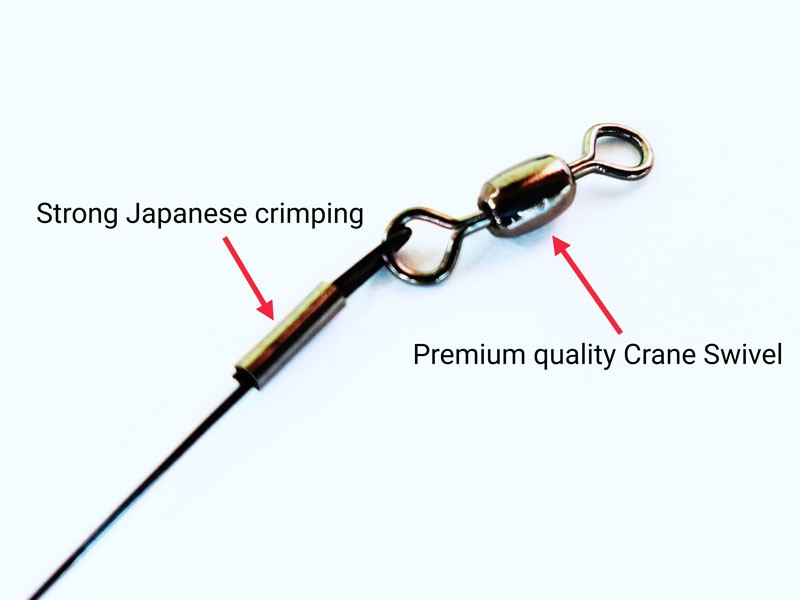
Cassan Wire Traces combine premium build with practical design. Made in Japan, they use 1×7 stainless steel strands for a balance of strength and flexibility, coated in black nylon to resist corrosion, reduce kinking, and minimise visual flash underwater. Both ends are professionally crimped, so you can clip them straight into your rig without fuss or fear of weak points.
This means less time preparing gear and more time fishing. Whether you’re trolling for Spanish mackerel off Gujarat, casting stickbaits into a Goan sunrise, or drifting live baits in Lakshadweep’s channels, you know your connection can withstand the kind of crushing bite that would slice through other leaders.
Protection Without Compromise
One of the biggest concerns with wire leaders is the fear they’ll kill a lure’s action. That’s why Cassan traces are kept short—typically 12 to 18 inches—long enough to guard against bite-offs, short enough to keep your lure moving naturally.
The nylon coating adds another layer of performance:
- Ease of handling – no sharp ends to snag fingers or gear.
- Stealth – reduced glare in bright, clear water.
- Durability – resistance to saltwater abrasion over repeated trips.
For anglers new to wire trace fishing, this balance of protection and performance makes the learning curve easy—you keep the same lure action you’re used to, with the insurance you need when targeting sharp-toothed predators.
Fishing Smart, Fishing Responsibly
Success on India’s coasts isn’t just about landing fish—it’s about doing so responsibly. Always check state-specific fishing regulations, especially seasonal bans during the monsoon. These closures protect spawning cycles and ensure healthy fish stocks.
Once you’re clear to fish, a solid rig might look like this: braid mainline, heavy fluorocarbon shock leader, a Cassan wire trace, and the lure or bait of your choice. From the murky tidal waters of Saurashtra to the crystal drop-offs of the Andamans, that setup keeps you connected when it matters most.
Fishing without bite protection is a gamble. Fishing with Cassan Wire Traces is a calculated choice that tips the odds in your favour. You protect your lures, you land more fish, and you spend your day focusing on the fight—not worrying about the next cut-off.
Whether you’re a visiting sport angler or a coastal local, the right gear is the difference between a story about the one that got away and a photo of the one you landed. Equip yourself with Cassan Wire Traces from Casa Ibrahim, and fish every stretch of India’s coastline with confidence.